Paraphrasing
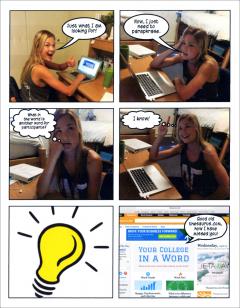
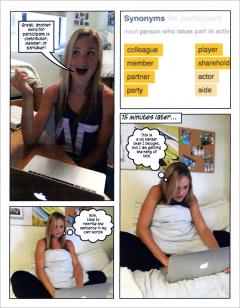
Emily’s comic suggests the essentially solitary nature of many of the research activities, andtouches on a few aspects involved in the process. The comic shows the technological resources available (e.g., “thesaurus.com”). And even with such devices and some understanding of the task, Emily comes to realize that it is “harder than [she] thought.” Paraphrasing is a painfully difficult task; and the prefix “para” includes meanings such as “amiss,” “to ward off,” and “protection against” (Mish, 1980, p. 1028), all of which suggest something sinister beyond the difficult calculations of wordsmithing. Decisions about what and how to paraphrase and quote the words and ideas of another’s academic writing is hard, hard, hard. And you do it alone, massaging and editing words into clauses, moving them around within the sentence, hopefully keeping the idea you are trying to “put into your own words.” And you do it sentence after sentence, paragraph after paragraph. It takes forever. And it sucks. And after the Herculean job of paraphrasing the content, writing must conform to a particular style of in-text citation and referencing the sources where the student found the information.